
Portsmouth: Where the City Began
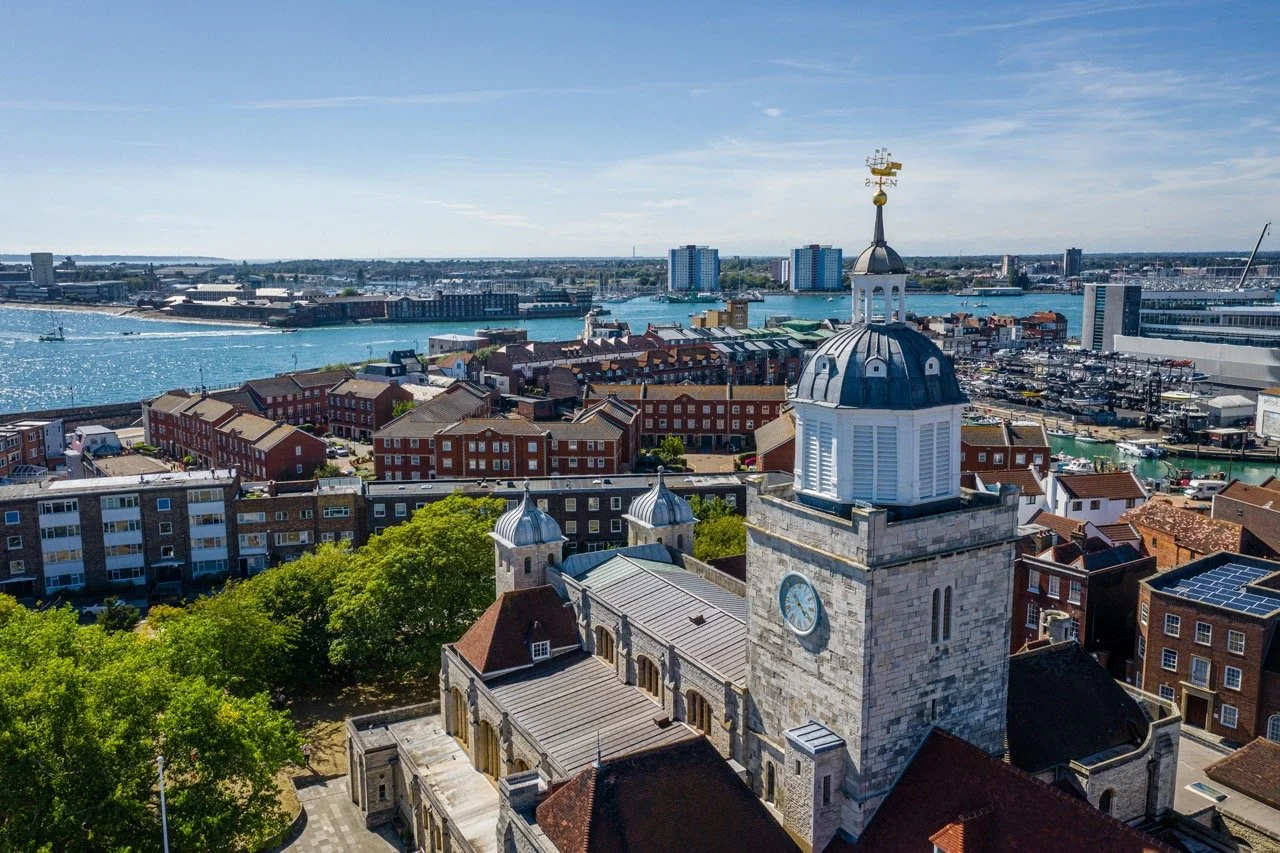
Portsmouth’s story can be brought back to the year 1180, when Jean de Gisors, a Norman landowner and merchant, purchased the Manor of Buckland. This land spanned much of the south-west of Portsea Island, including the area what we now know as Old Portsmouth – home to the Cathedral of the Sea!
Between 1180 and 1186, Jean de Gisors gifted part of this land to Southwick Priory for the building of a chapel dedicated to Thomas of Canterbury. St Thomas’ Chapel is the oldest part of today’s Cathedral, and its walls have borne witness to Portsmouth’s growth for more than eight centuries.
Jean de Gisors first called the area Sudewede, meaning ‘South-water’. In a later document, however, he referred to it as “my vill of Portsmouth”. This is the earliest known written use of the name Portsmouth, marking the settlement’s first appearance in recorded history.
In 1194, King Richard I granted Portsmouth a royal charter, officially recognising it as an independent royal borough. The charter allowed the town to hold weekly markets and an annual fair, helping it to flourish. This moment is commemorated in the Cathedral’s stained-glass window of Richard I, which shows him holding the charter alongside Portsmouth’s crescent moon and eight-pointed star.
From these beginnings, Portsmouth developed into the historic maritime city we know today, gaining city status in 1926. You can explore this story further in Portsmouth Cathedral’s New Welcome Area and Exhibition, where the city’s origins and journey through time are brought to life.
With thanks to the National Lottery Heritage Fund for supporting this celebration of Portsmouth’s City Centenary.